

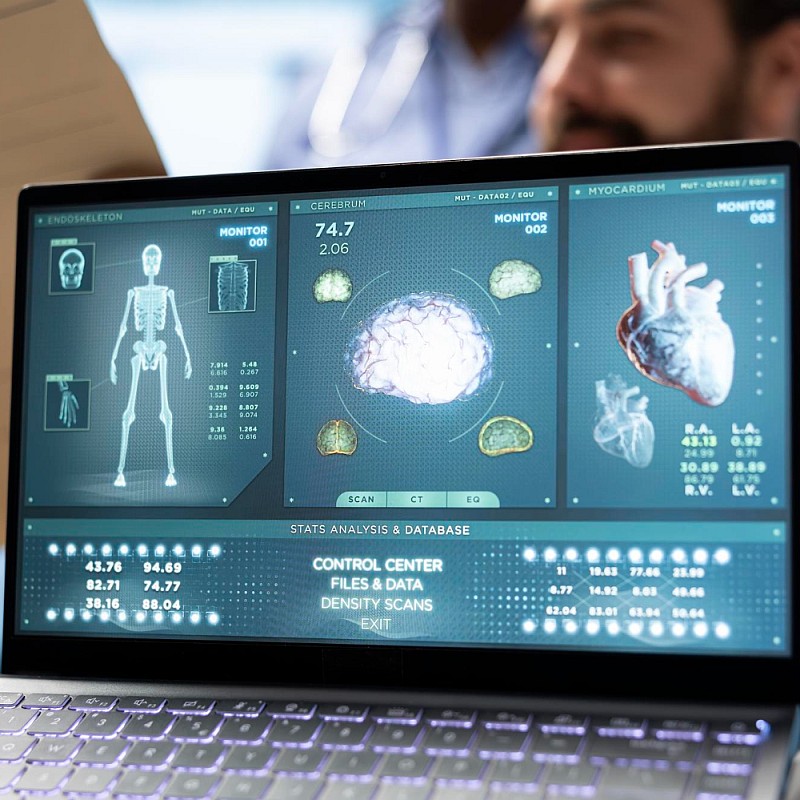
Modern medical devices are no longer isolated products. They are connected software ecosystems that must perform reliably in clinical environments while meeting demanding expectations for patient safety, usability, cybersecurity, data integrity and regulatory evidence.
EZEN brings these disciplines together through one integrated engineering model. We help established manufacturers and emerging innovators build new products, strengthen software quality, connect devices to digital-health ecosystems, modernize legacy platforms and support products throughout their commercial life.
New products, next-generation platforms and software-enabled features.
Architecture, usability, cybersecurity, testing, traceability and release readiness.
Legacy software, obsolete technologies, technical debt and long-term sustenance.
A multidisciplinary capability model spanning product strategy, device software, digital applications, cloud, data, quality and lifecycle support.
Translate product vision, user needs and clinical workflows into a practical engineering roadmap and maintainable software architecture.
Discovery, feasibility and product roadmap
System and software architecture
Technology and platform selection
Interface, data-flow and release planning
Develop reliable software that controls, monitors and communicates with medical-device hardware.
Embedded applications, firmware and device-control software
Drivers, middleware, sensors and instrument integration
Hardware-software integration, diagnostics and logging
Performance, reliability and update mechanisms
Create intuitive interfaces for clinicians, technicians, caregivers and patients without compromising safety or workflow efficiency.
Clinical workflow and user research
Touchscreen, workstation and device-panel interfaces
Data, image, alarm and status visualization
Usability risk-control implementation and GUI verification
Engineer standalone and connected software products that support clinical, diagnostic, monitoring or therapeutic workflows.
Software as a Medical Device (SaMD)
Desktop, web and mobile applications
Clinician portals, patient applications and dashboards
Cloud-native services, deployment and support
Connect devices securely with applications, clinical systems, service platforms and healthcare data ecosystems.
Device connectivity, gateways and secure APIs
Remote diagnostics, telemetry and device management
EHR/EMR, laboratory and hospital-system integration
DICOM, HL7, FHIR and clinical-data exchange
Turn device, image and clinical data into secure, scalable and actionable capabilities.
Data pipelines, analytics and visualization
Image and signal processing
Computer vision, predictive analytics and anomaly detection
Edge/cloud AI integration, MLOps and model monitoring
Integrate security across architecture, development, verification, release and post-market support.
Security architecture and threat modeling
Secure coding, identity, encryption and secure communications
Software composition analysis and SBOM support
Vulnerability assessment, remediation and secure-update support
Verify that the complete software-enabled product performs reliably before release through integrated system testing and scalable test automation.
Integrated product and system testing
Hardware-software, GUI, connectivity and end-to-end workflow testing
Functional, regression, performance and reliability testing
Automated test frameworks, traceability and reporting
Develop and maintain software evidence that supports the client quality system and product-specific regulatory strategy.
Development plans, requirements, architecture and design records
Risk-management, traceability and configuration records
Verification protocols, reports and release documentation
DHF, technical-file and submission-documentation support

Discover

Define

Architect and Design
Build

Verify
Release
Sustain
The right model combines iterative engineering with controlled requirements, risk management, documentation and objective evidence.
Linux, Windows, embedded environments, desktop, web, mobile and cloud-based software.
HL7, FHIR, DICOM, EDI, CDA, APIs and integration with imaging, laboratory, medical-device and health IT systems.
Cloud, data engineering, DevOps, test automation, AI/ML, MLOps, UI/UX and modernization.
Systems thinking, risk-based development, usability, cybersecurity, verification, traceability and lifecycle documentation.
Quality cannot be inspected into medical device software at the end of development. It must be reflected in requirements, architecture, risk controls, implementation, verification, release and change management.
Depending on the product and target market, EZEN supports work within the client-approved quality system and product-specific regulatory strategy, with experience relevant to:
ISO 13485 quality-management systems
ISO 14971 medical-device risk management
IEC 62304 medical-device software lifecycle processes
IEC 62366-1 usability engineering
IEC 82304-1 health-software product safety
IEC 81001-5-1 secure health-software lifecycle activities
FDA QMSR, software-documentation and cybersecurity expectations
EU MDR and IVDR requirements
HIPAA, GDPR and applicable privacy requirements
DICOM, HL7 and FHIR interoperability standards
EZEN supports the client product-development and regulatory process. Regulatory clearance or approval remains the responsibility of the legal manufacturer and applicable regulatory authorities.
Software requirements are shaped by the device, clinical workflow, user population and care environment. EZEN brings experience across:
Visualization, diagnostic, procedural and therapy-support workflows.
Device interfaces, imaging, procedural applications and women’s-health workflows.
Monitoring, diagnostic, visualization, data-analysis and therapy-related applications.
Image acquisition, processing, visualization, workflow integration and AI-assisted analysis.
Procedural workflows, surgical applications, visualization, planning and connected-device experiences.
Embedded device software, clinical GUIs, visualization, workflow integration and connected surgical-system platforms.
Software engineers work with domain, quality, regulatory, usability and cybersecurity specialists rather than across disconnected vendors.
EZEN can connect device software, GUI, applications, cloud, data, AI, integration, testing and lifecycle support.
Risk, traceability, verification and release evidence are incorporated through development - not added just before a milestone.
Clients receive engaged leadership, clear ownership and teams aligned to the product rather than a generic delivery pool.
Engage EZEN for an assessment, a defined work package, a dedicated product team, integrated product testing, test automation, modernization or long-term sustenance.
We support both new-product innovation and the disciplined evolution of established platforms and multi-generation portfolios.
See how EZEN helps MedTech organizations solve complex software, quality, cybersecurity and modernization challenges across the product lifecycle.
EZEN supports embedded and device-control software, medical-device GUIs, desktop, web and mobile applications, Software as a Medical Device (SaMD), connected-device platforms, cloud services, image-processing applications, data platforms and AI-enabled capabilities.
Yes. EZEN can align its development and testing activities with the client’s approved procedures, templates, tools, design controls, documentation requirements and change-management processes.
EZEN’s support can include lifecycle planning, requirements, architecture, risk-management inputs, implementation, verification, configuration management, problem resolution, maintenance and software lifecycle documentation.
Yes. EZEN tests the complete software-enabled product across device software, embedded systems, GUI, connectivity, applications and supporting platforms. We also develop automated GUI, API, system and regression test frameworks to improve coverage, repeatability and release confidence.
Yes. EZEN can assess legacy architecture and code, define a controlled modernization roadmap, migrate platforms, refactor software, replace obsolete components, automate regression testing and update lifecycle documentation.
EZEN integrates cybersecurity across architecture, development, testing and maintenance through activities such as threat modeling, secure design, software composition analysis, SBOM support, vulnerability assessment, remediation and post-market support.
EZEN supports image processing, computer vision, predictive analytics, model integration, edge AI and cloud-based AI capabilities. The engineering approach is adapted to intended use, clinical risk, data quality, security and the client’s regulatory strategy.
Whether you are developing a new device, strengthening an established product, modernizing a legacy platform or improving software quality and cybersecurity, EZEN brings together the engineering and MedTech expertise needed to move forward.